Free press release distribution is real, and a handful of these platforms have been running for fifteen-plus years. The catch is simple: free sites tend to sit on low domain authority and their outbound links are almost always nofollow, so they're great for a hosted page you can index and share, weak for landing in a reporter's inbox. Used with clear eyes, the seven options below cover most of what a bootstrapped founder, a solo marketer or a student needs. Treat them as a substitute for real media outreach and they'll disappoint you. Here's what each one actually gives you, what it doesn't, and where to draw the line.
Key takeaways
- Genuinely free distribution exists. PRNow, PRLog, openPR, SubmitPressRelease and PRSync all let you publish at no cost, and PRNow adds 10+ free SEO and AI tools on top.
- Free links rarely help rankings directly. Press-release links are typically nofollow, and Google does not pass PageRank through them, so treat free PR as a hosted page plus an indexing signal, not a backlink engine.
- Authority is the real ceiling. Free PR sites carry low domain authority and crowded archives, so genuine media pickup is rare without targeted, paid distribution.
- The smart play is a hybrid. Use free tools to draft, host and index; use paid, journalist-targeted distribution when you need verifiable placements.
- For a newsworthy launch with proof of coverage, free won't cut it. That's where verifiable, reported placements earn their keep.
In this article
- How free PR actually works
- 1. PRNow: free distribution + AI tools
- 2. PRLog: free hosted SEO page
- 3. openPR: free self-service archive
- 4. SubmitPressRelease: one free release a month
- 5. PRSync: dated but free
- 6. Medium: free self-publishing
- 7. HackerNoon: free editorial for tech
- Bonus: Hashnode, dev.to, Substack
- Free vs paid: when to upgrade
- FAQ
How free PR actually works (and where it breaks)
A free newswire gives you a public, hosted page for your announcement. That page can get indexed by Google, it gives you a link to share on social and in email, and on the better platforms it carries an "as published" feel that lends a sliver of credibility. All useful. None of it is the same as a journalist choosing to write about you.
Two limits show up every time. First, authority: free archives accept almost everything, so search engines don't trust them the way they trust an established newsroom. Second, link value. The links you place inside a free release are nearly always nofollow, and Google has said for years that press-release links should be nofollowed like ads and don't pass ranking value. We dug into the evidence in our piece on whether newswire services help SEO and AI rankings; the short version is that PR helps indirectly, by earning coverage and brand mentions, not through the release's own links.
1. PRNow: free distribution plus a stack of AI tools
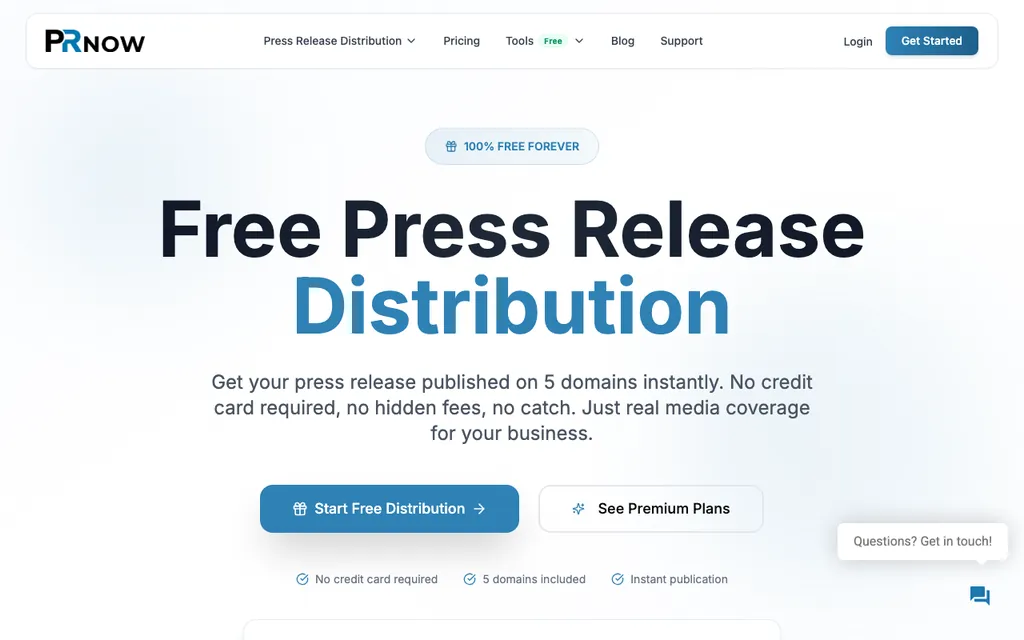
What it is. PRNow, rated Great on Trustpilot, is the most generous free offering on this list. Its free press release distribution publishes your release on five news domains instantly, once a month, with no credit card required. Separately, it hosts more than ten free SEO and AI tools you can use without even signing up.
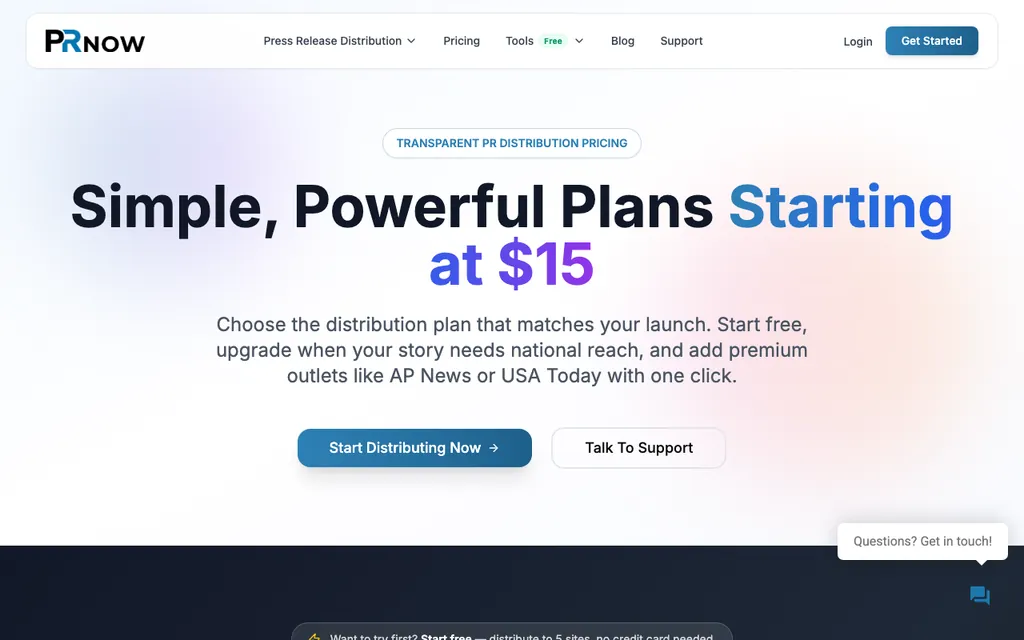
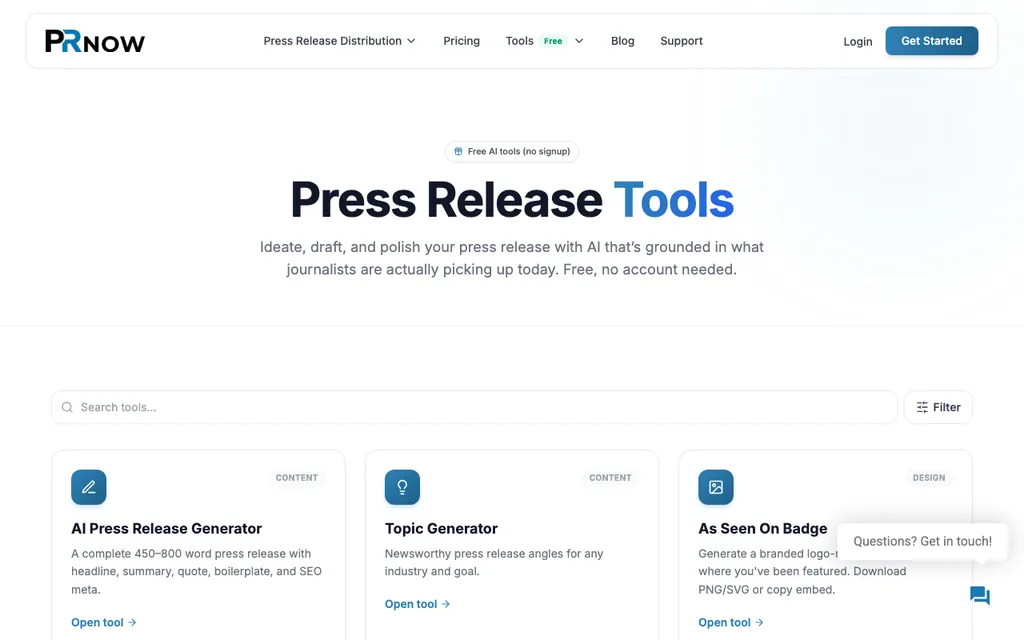
What you get free. The tools alone are worth bookmarking: an AI press release generator, headline and topic generators, a PR-to-social converter, checkers for domain rating, traffic, dofollow status, indexing and AI visibility, keyword research, a URL indexer and a press release database. Add the five-domain free distribution and you can draft, optimize and publish a release end to end at no cost. When you want real reach, the paid wire starts at $15 per release for Basic (400+ publishers, same-day distribution on working days) and $29 for Standard (500+ publishers plus 100+ TV and radio sites), both on a published-or-refunded basis. Prices verified August 2026.
The catch. Five domains is a starting point rather than broad syndication, and the premium outlets (AP News, USA Today and the like) are paid add-ons. As with any free tier, what you get is publish-and-host, not earned editorial coverage.
Best for. Cost-sensitive users who want a free tool belt and a cheap, fast paid wire when they're ready to scale. It's the closest thing here to a free all-in-one.
2. PRLog: a free hosted SEO release page
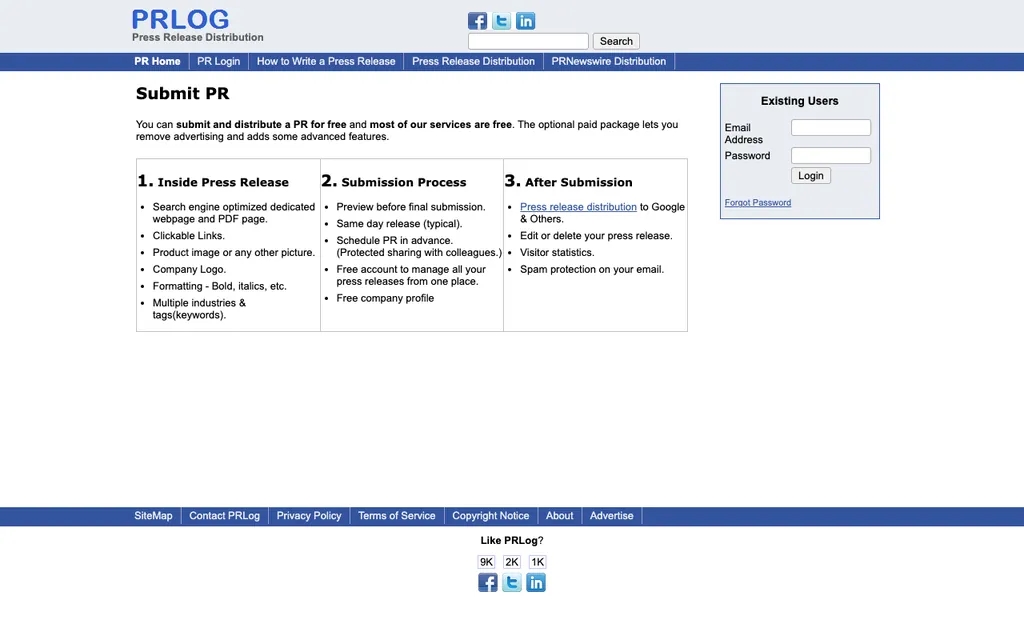
What it is. PRLog is a long-running free service that hosts your release as a clean, SEO-friendly page and pushes it to Google. Its homepage still bills itself as a free press release distribution service, and the free tier is ad-supported rather than a trial.
What you get free. A hosted release page (with a PDF version) of up to 500 words, two plain clickable links, one video embed and one industry listing, same-day publishing in most cases, visitor statistics and a free company profile where all your releases live together. For a small business that just wants a permanent, shareable home for an announcement, that's a tidy package at zero cost.
The catch. Authority is low, and the free tier shows ads. Paid packages are published and cheap: Basic at $29 per release removes the ads and adds a photo, Premium at $49 adds Google News, an 8,000-plus subscriber list and 200+ syndication sites, and Premium2 at $99 stretches syndication to 500+ sites (verified August 2026). Don't expect the hosted page to rank for anything competitive on its own.
Best for. Anyone who wants a free, hosted release page they can index and link to, fast.
3. openPR: free self-service publishing into an archive
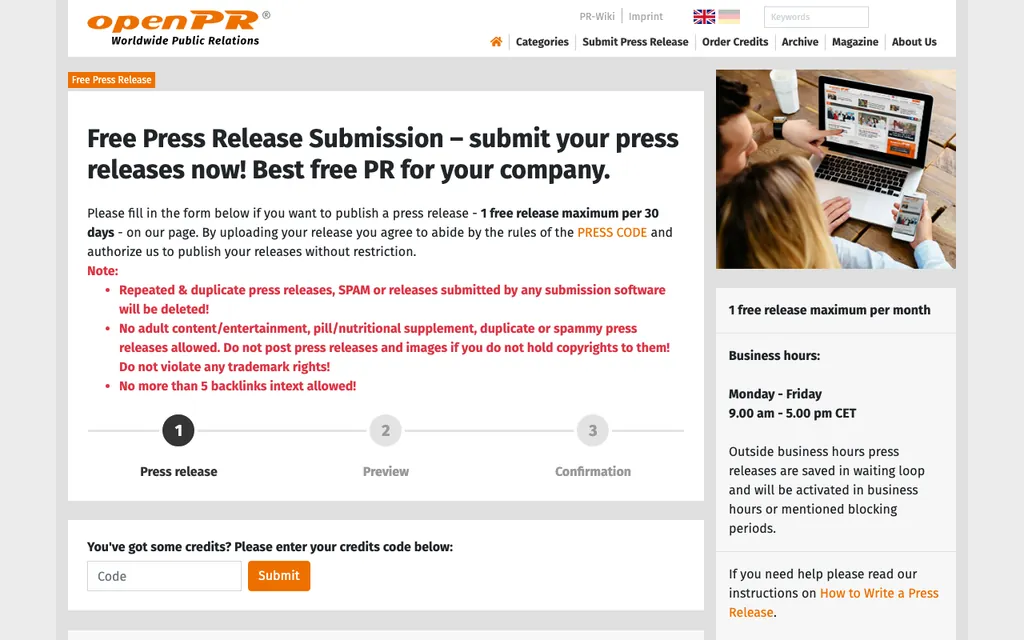
What it is. openPR is a German-run, self-service platform that drops your release into a categorized PR archive, and it has been doing so since 2004.
What you get free. One free release every 30 days, a category-sorted listing and a public URL. Submissions are reviewed by hand during business hours (Monday to Friday, Central European time), and you'll need a company email address; Gmail and other free mailboxes are turned away. If one a month isn't enough, paid credits start at 49 euros plus VAT for a single release (verified August 2026).
The catch. Authority is low, outbound links are nofollow and capped at five per release, and moderation means turnaround isn't instant. It's a busy archive, too, so your release competes for attention with a lot of similar content.
Best for. Free self-service publishing when you mainly want a public, indexable record of the news.
4. SubmitPressRelease: one free release per domain, every month

What it is. SubmitPressRelease does exactly what the name says. We tested it and can confirm the free tier is genuine: one free press release per domain per month, no credit card, no forced upgrade. You submit through its web app at app.submitpressrelease.org after creating a free account.
What you get free. A hosted release page on a modern, cleanly designed site, with a public URL you can index and share. Paid upgrades exist (multi-image support, syndication and premium outlets such as AP News or USA Today), but they're strictly optional, and the site itself points you to PRNow when you want premium distribution.
The catch. Authority is the honest trade-off: the domain carries a lower rating and less traffic than the big names, so a placement here is a useful extra rather than your main channel. Nothing about that is unusual for a free wire; it just means you shouldn't lean on it alone.
Best for. A no-cost extra placement alongside your primary release, especially if you're already publishing monthly.
5. PRSync: dated, HTTP-only, still free
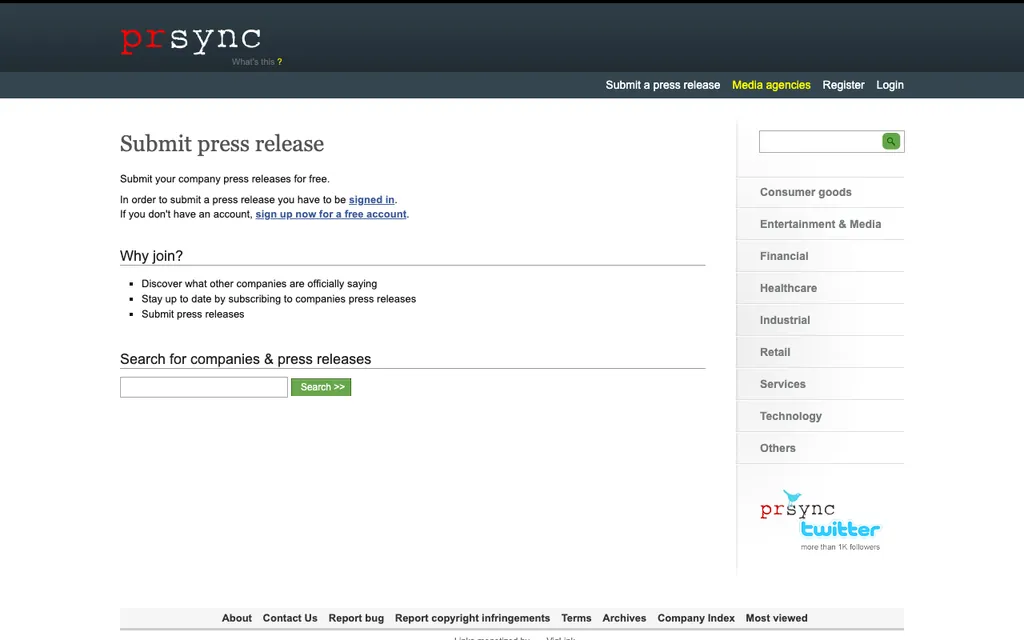
What it is. PRSync is the most old-fashioned site on this list, and it shows: the design is straight out of the 2000s and the site still runs on plain HTTP with no HTTPS. It is live, though, and its submission page says plainly that posting company press releases is free, and its About page adds that it always will be.
What you get free. A free account, then a hosted release page with a public URL. The terms allow free accounts one submission per day, which is more generous than most. No paid tier is published, so what you see is what you get.
The catch. Keep your expectations low on authority. The archive leans heavily on syndicated market-research summaries, editorial gatekeeping is minimal, and the missing HTTPS is a trust signal some visitors will notice. Treat it as a bonus indexable page, nothing more.
Best for. One more free, hosted copy of your announcement when you're stacking placements and don't mind a dated interface.
6. Medium: free, unlimited self-publishing

What it is. Medium isn't a newswire, but it's a free, unlimited place to publish your story in your own words and reach Medium's readership. Writing costs nothing once you've signed up.
What you get free. A polished, mobile-friendly post you can publish in minutes, plus exposure to Medium's distribution and topic feeds. It reads more like a blog post than a press release, which can be a feature: announcements framed as a narrative often land better than corporate boilerplate.
The catch. Outbound links on Medium are nofollow, so there's no link-equity benefit. The feed is crowded, and a post here is self-publishing, not media placement. Reach depends heavily on your own promotion.
Best for. Founders and marketers who want a free, well-designed home for the story behind an announcement.
7. HackerNoon: free editorial publishing for tech and startups
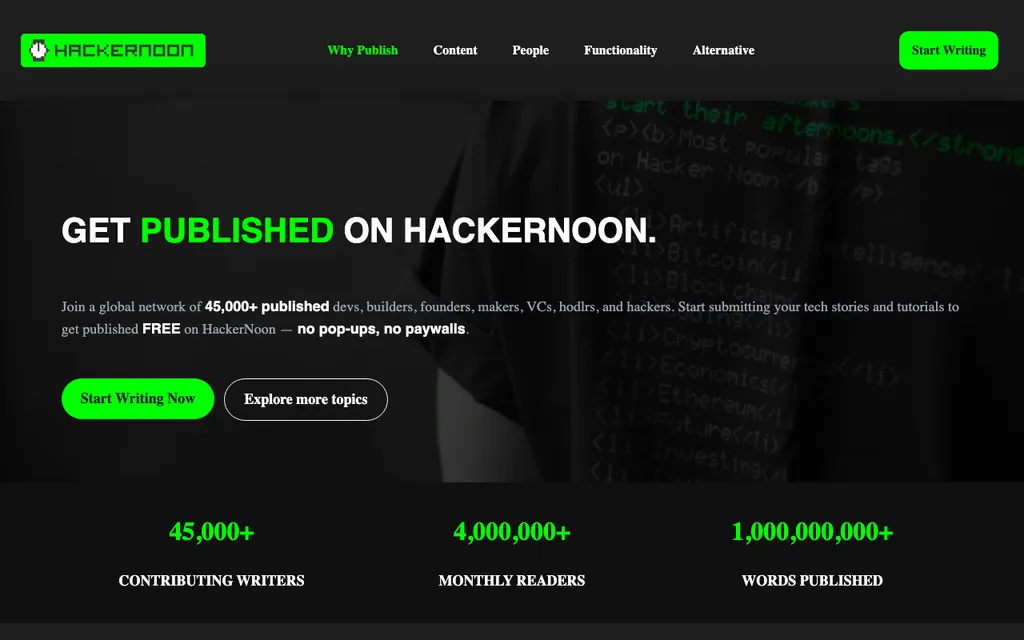
What it is. HackerNoon is a tech and startup publication that lets individual writers publish for free after human editorial review, on a domain with meaningfully higher authority than the average free PR site.
What you get free. A spot on a respected tech publication if your piece clears review, which is useful for thought leadership, product stories and founder essays. Because there's a human editor in the loop, getting accepted carries more weight than a self-serve archive listing.
The catch. Editorial review means rejection is possible, and posts published under a company's name rather than a person's fall into the paid business-blogging program: a single publishing credit runs $650, with bundles that bring it down to $299 to $399 per post (verified August 2026). This is a publishing platform with standards, not a press-release dumping ground.
Best for. Tech and startup teams with a genuinely useful story to tell, not a thinly veiled ad.
Bonus: three more free homes for your story
If you write for developers or want to own your own publication, three more free platforms deserve a mention. Hashnode and dev.to are free developer-community blogging platforms, ideal for technical announcements and engineering deep-dives. Substack gives you a free newsletter and blog, and links on your own Substack publication are dofollow, one of the rare free spots where that's true, because it's your property rather than a shared archive.
Quick comparison of the free options
| Platform | Type | Free tier | Free limit | Link value |
|---|---|---|---|---|
| PRNow | Wire + AI tools | 5 domains + 10+ tools | Once a month | Nofollow (paid dofollow add-on) |
| PRLog | Hosted page | Page + Google, ad-supported | 500 words, 2 links | Nofollow |
| openPR | Self-service archive | Categorized listing | 1 per 30 days | Nofollow |
| SubmitPressRelease | Wire | Hosted release page | 1 per domain per month | Assume nofollow |
| PRSync | Wire (HTTP only) | Hosted release page | 1 per day | Assume nofollow |
| Medium | Self-publishing | Unlimited posts | None | Nofollow |
| HackerNoon | Editorial (tech) | Free after review | Editorial review | Varies |
Free tiers, limits and prices were verified in August 2026 and can change; always confirm on the provider's site.
Free vs paid: when to upgrade
Free works beautifully for a narrow set of jobs: hosting a release at a stable URL, getting that page indexed, sharing a credible-looking link, and practising your PR writing without spending a dollar. If that's your goal, stack two or three of the tools above and you're set.
It stops working the moment "get covered" becomes the goal. Low-authority archives don't earn journalist attention, nofollow links don't move rankings, and there's no one working your story into a real outlet. The market backs this up. Across the providers with transparent paid entry pricing, the average entry sits around $168 and the median at $120, with cheap, fast wires starting as low as $15. We broke the whole landscape down in our 2026 newswire pricing analysis and ranked the strongest paid options in our roundup of the 10 best newswire services for 2026.
The honest dividing line is proof. A free hosted page can say "we announced this." A targeted, paid release can say "here are the outlets that covered it, with URLs and screenshots." If you're raising, launching, or briefing a board, that proof is the whole point. Our distribution is built around real newsroom relationships and journalist targeting by beat and region, with editorial review and verifiable placements reported back with a live link and a dated screenshot. See how it works, weigh the plans, or read what it looked like for other teams. When you're ready to move past free, you can get started here.
Free gets you a page. We get you proof.
Targeted distribution to real newsrooms, editorial review, and verifiable placements reported with a URL and a screenshot. No blast-and-pray.
Frequently asked questions
Yes, for specific jobs. A free release gives you a hosted page you can index, share and link to, plus a slight credibility boost from being "published." PRNow is especially worth a look because its free AI and SEO tools save real time. What free sites can't do is earn coverage in real outlets, so use them for publishing and indexing, not for media pickup.
Not directly. Links inside distributed releases are nearly always nofollow, and Google does not pass ranking value through them. Its spam policy treats optimized-anchor press-release links as link spam unless they're marked nofollow or sponsored. The real wins are indirect: referral traffic, indexing, brand mentions and the chance of earned editorial coverage. We unpack the evidence, including the data on AI citations, in do newswire services help SEO and AI rankings?
For most people, PRNow is the strongest all-rounder: free five-domain distribution plus 10+ free SEO and AI tools, with a cheap paid wire from $15 if you scale up. If you only want a clean hosted page, PRLog is hard to beat, and SubmitPressRelease or openPR will each give you one more free placement a month. For developers, dev.to, Hashnode and HackerNoon publish to higher-authority, technical audiences. Pick by goal, and stack two or three rather than betting on one.
Pay when you need proof of coverage rather than a self-hosted page: a funding round, a product launch, a board or investor update. Free archives don't earn journalist attention, so verifiable placements require targeted, paid distribution. Affordable paid wires start around $15 to $195, with mid-market options in the $399 to $965 range. See our pricing breakdown to match a budget to a goal, then get started when you're ready.

Newswire Distribution Editorial Team
We distribute press releases to working journalists and newsrooms, and we report back every placement with a link and a screenshot. Every tool we write about gets tested first, caveats included, and that applies to our own category too. Questions? Talk to us.