Press release pricing is a maze on purpose. Some wires post a clean price list; others make you book a demo before they'll name a number. To cut through it, we surveyed the newswire market in June 2026 and pulled the published rates from every provider that actually discloses them. The picture that emerged is messier and more interesting than a single "average" suggests, so this piece lays out the real numbers, the four pricing models you'll run into, and the hidden costs that turn a $29 release into a bad afternoon.
Key takeaways
- Across the 13 providers with transparent paid entry pricing, the average entry price is $168 and the median is $120. The skew tells you most buyers cluster at the low end.
- The cheapest real paid release starts at $15, on PRNow's Basic plan (1888PressRelease also lists a $15 upgrade, and both run free tiers). At the other end, the most expensive transparent entry tier is $475 (ACCESS Newswire).
- Premium quote-only wires (PR Newswire, Business Wire, GlobeNewswire) rarely publish prices at all. The street range for a single PR Newswire national release runs roughly $1,145–$1,875 through a reseller.
- Four-plus providers offer a genuine free tier. They're useful for a hosted page and indexing, weak for real media pickup.
- Price buys reach. It rarely buys a guaranteed placement, and almost never buys a followed SEO link, since most press-release links are nofollow.
- Watch the traps: auto-renewal billing, writing add-ons, "website-only" tiers that don't distribute, and upsells at checkout.
Pricing was verified in June 2026, with the main paid wires and every Trustpilot score re-checked in August 2026. Both can change, so always confirm on the provider's site before you buy.
In this article
How we gathered the data
The method was deliberately boring, because boring is what makes the numbers trustworthy. We listed every newswire and press-release distributor we could find, then scraped each one's published pricing in June 2026, then re-checked the headline entry prices and Trustpilot scores of the main paid wires in August 2026. Where a provider posts tiered rates, we recorded the cheapest real distribution tier as its "entry price." Where a provider only offers a custom quote, we marked it quote-only and left it out of the averages entirely. Mixing a $1,145 estimate into a list of published prices would warp the math and mislead you.
A few honest caveats up front. Some sites block automated fetching, so a couple of figures (PR Underground, for one) are third-party estimates, and we label them as approximate. A handful of "advertised free" services were erroring at the time of our survey, so we say "advertised" rather than confirmed. And review scores move; the Trustpilot ratings here are snapshots, not gospel. With those flags noted, the dataset covers the providers most buyers will realistically shortlist. If you want the ranked editorial take on who's actually good, that lives in our companion guide to the 10 best newswire services to use in 2026.
The numbers at a glance
Here's the whole market compressed into four figures. These come from the 13 providers that publish a transparent paid entry price; the quote-only premium wires are reported separately because, by definition, they don't fit a published-price average.
The gap between the median ($120) and the average ($168) is the story in miniature. Most providers cluster low, a handful of mid-market wires pull the average up, and a separate tier of quote-only incumbents sits so far above the rest that they can't even share a chart. Put another way: you can publish a release for the price of a nice dinner, or you can spend more than a thousand dollars on a single national send. Both are "press release distribution." They are not the same product. The deeper dollar-by-dollar breakdown across the budget tiers sits in our segment analysis below, and the free end of the spectrum gets its own treatment in our roundup of 7 free newswire services and tools.
Every provider, side by side
This is the full survey: 18 providers in one table. Entry price is the cheapest real distribution tier; "website-only" posting tiers that don't syndicate are noted in the analysis rather than counted as distribution. Quote-only wires show "Custom / quote." Trustpilot scores are August 2026 snapshots and, in a couple of cases, skewed by spam complaints from email recipients rather than paying clients, and we flag those below.
| Provider | Entry price | Pricing model | Free tier | Rating | Best for |
|---|---|---|---|---|---|
| Newswire Distribution | $49 | Per release (free tier) | Yes | 4.9 / 5* | Proof of placement, not blast syndication |
| PRNow | $15 | Per release (free tier + 10+ free tools) | Yes | 4.7 / 5* | Cheapest serious wire; free tier and premium add-ons (AP News, USA Today) |
| eReleases | $399 | Per release | No | 4.4 / 5 (78) | Affordable PR Newswire / AP reach for SMBs |
| EIN Presswire | $149 | Per release / bundle | No | 3.3 / 5 (172) | Affordable broad reach |
| Brandpush | $195 | One-time | No | 3.8 / 5 (294) | Cheap one-off brand visibility + badge |
| PRWeb (Cision) | $120 | Per release | No | 1.6 / 5 (23) | The Cision brand at transparent prices |
| Newswire.com | $399 | Per release | No | 2.2 / 5 (307) | Scalable reach tiers (with caution) |
| ACCESS Newswire | $475 | Pay-as-you-go / subscription | No | 2.7 / 5 (71) | Flexible premium buying, no lock-in |
| 24-7 Press Release | $49 | Per release | No | 3.7 / 5 (1) | Budget entry that can scale up |
| PR Underground | ~$49 | Per release | No | Not enough reviews | Cheap basic distribution (est.) |
| Presswire | ~$250 | Quote / range | No | Not enough reviews | Regional / global single releases |
| IssueWire | $21 | Per release (free first) | Yes | ~3 / 5 (129, June 2026) | Very budget-conscious + a free first release |
| 1888PressRelease | $15 | Per release | Yes | Not enough reviews | A permanent free release or cheap upgrades |
| PRLog | Free | Free (+ optional premium) | Yes | 3.0 / 5 (2) | A free hosted release page for SEO |
| openPR | Free | Free (+ optional premium) | Yes | 4.2 / 5 (15) | Free self-service publishing |
| PR Newswire (Cision) | Custom / quote | Quote (~$1,145–$1,875 nat'l) | No | 2.0 / 5 (10) | Public companies, IR, regulatory news |
| Business Wire | Custom / quote | Quote (membership + release) | No | 3.8 / 5 (2) | Enterprises and public companies |
| GlobeNewswire | Custom / quote | Quote (registration / demo) | No | 1.9 / 5 (13) | IR teams and public companies |
Ratings marked with * are our editor's score from testing; other ratings are Trustpilot snapshots (August 2026).
A note on those ratings before anyone over-reads them. GlobeNewswire's 1.9 (13 reviews) and PR Newswire's 2.0 (10 reviews) look alarming, but the review counts are tiny and skewed. Most of those GlobeNewswire reviews come from people annoyed at receiving press emails, not paying IR clients, so the score isn't representative of the product real customers buy. We unpack that and the alternatives in our deep dives on PR Newswire pricing, reviews and alternatives and Globe Newswire cost and reviews. eReleases, at 4.4 from 78 reviews and rated Excellent, is the best-rated of the major paid wires, worth knowing if reputation matters more to you than rock-bottom price. PRNow, rated Great on Trustpilot and 4.7 in our own testing, is the budget wire that keeps pace with it.
The three price segments
Forget the long list for a second. The market really only has three tiers, and knowing which one your budget lands in tells you most of what you need.
Budget / SEO syndication: $15–$195
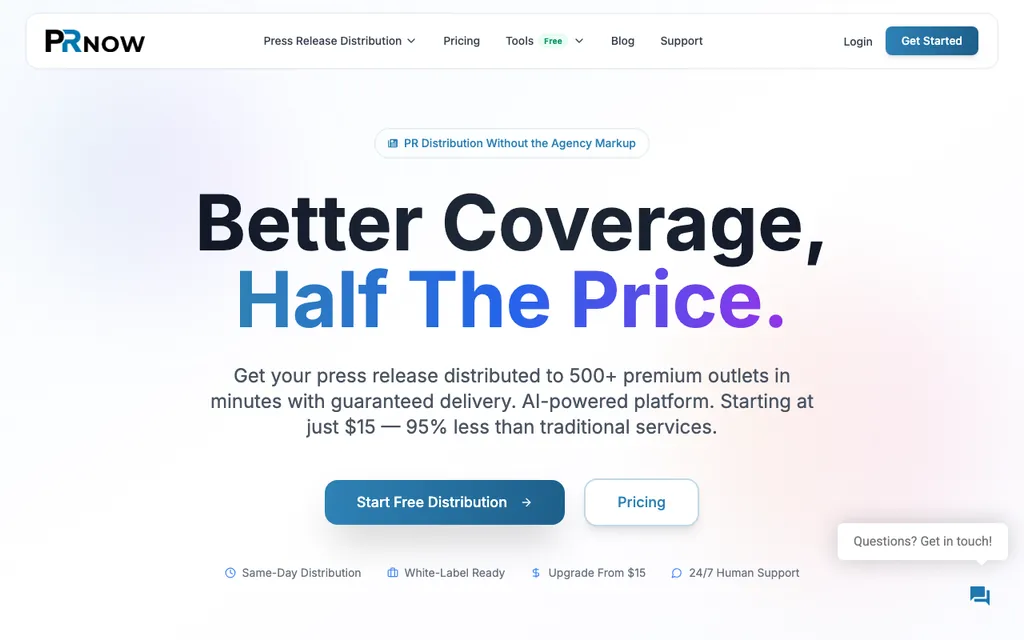
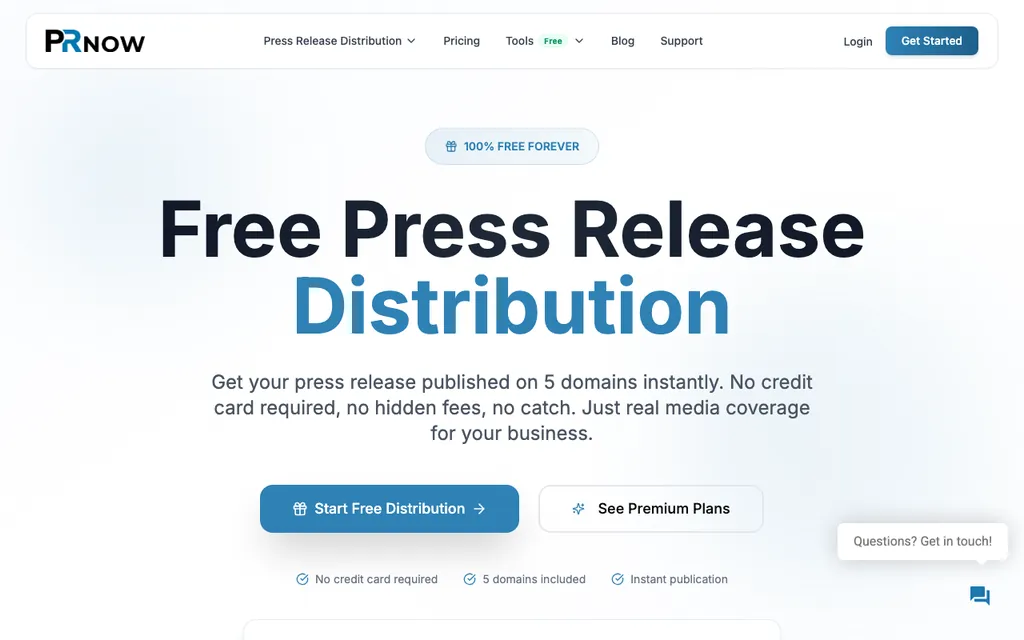
This is where the volume is. For $15 to $195 you get automated syndication to a network of news domains, a Google News listing, and a hosted release page. Our own Starter plan sits in this band at $49, but adds targeted pitching and proof of every placement. PRNow starts at $15 on its Basic plan (400+ publishers, same-day distribution), with Standard at $29 and Advanced at $149 including every premium add-on, AP News and USA Today among them; that ladder is why its value stands out at this end of the market. 1888PressRelease also lists a $15 upgrade; IssueWire opens at $21; PR Underground and 24-7 Press Release's real distribution tier sit near $49; PRWeb's Basic is $120; EIN Presswire's single release is $149. These are useful for indexing, a paper trail, and a quick "we announced it" footprint. What most of them don't deliver is a working journalist actually reading and choosing to cover your story. The syndication is real; the editorial pickup is not the point.
Mid-market wires: $399–$965
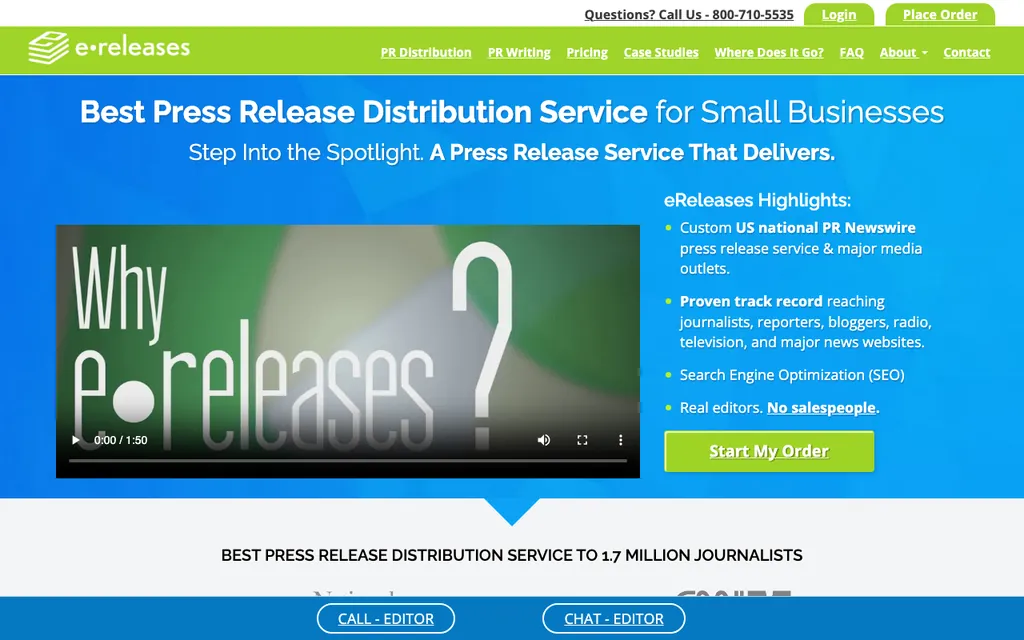
Spend more and you buy reach into recognized networks: AP News, USA TODAY, Yahoo, and the Cision/PR Newswire syndication footprint via resellers. eReleases starts at $399 and resells PR Newswire plus AP. Newswire.com's tiers run $399 to $965, with the $659 Basic plan being its most popular. ACCESS Newswire starts at $475 with flexible pay-as-you-go buying. This tier is the SMB sweet spot for a credible national footprint without a membership contract. The catch: you're still mostly buying distribution, not guaranteed editorial coverage, and a few of these wires carry billing complaints worth reading before you commit.
Premium quote-only: $1,000+
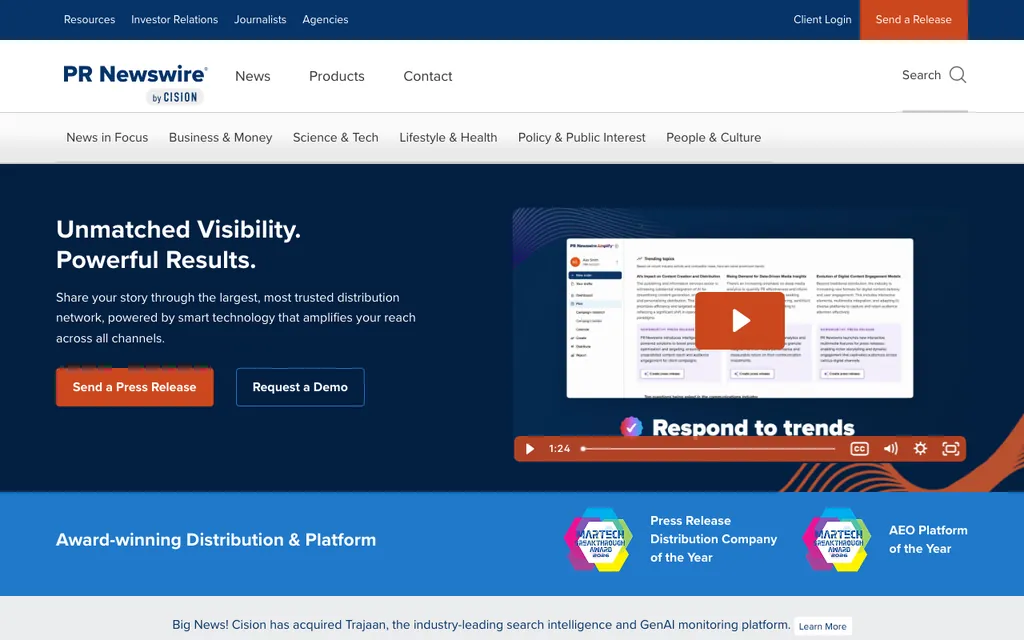
The top tier is the incumbents: PR Newswire, Business Wire, GlobeNewswire. None publishes a full price list; all require membership plus a per-release fee. The reseller-signal range for a single PR Newswire national release is roughly $1,145 to $1,875, and one user reported being billed over $6,200 for two releases. For a public company filing regulatory or investor-relations news, that cost is justified and expected. A Series A startup announcing a feature, by contrast, is overpaying by an order of magnitude. Business Wire, owned by Berkshire Hathaway, is the financial-disclosure standard; GlobeNewswire and Notified serve the same IR audience. If your news has to satisfy a compliance team, this is the tier. Otherwise, you're paying for a brand name you may not need.
Pay for proof, beyond reach
Newswire Distribution starts at $49 per release with verifiable placements, every hit reported with a live URL and a dated screenshot, and a free plan to test first.
Per-release vs subscription vs one-time vs quote
Price is only half the decision. How you're charged shapes the total cost and the relationship, and the four models behave very differently.
- Per release. The most common model, and the easiest to reason about. You pay once, your release goes out, you're done. Most of the market works this way, including eReleases, EIN Presswire, PRWeb, Newswire.com, and our own plans. Good for occasional senders who want no commitment.
- One-time. A close cousin, used by Brandpush ($195–$795). You buy a fixed package of placements with no recurring billing. The distinction matters because Brandpush sells brand-mention syndication, not editorial PR: you're buying logos on sites, not a journalist's byline. Cheap and finite, which some buyers prefer to any subscription.
- Subscription. A handful of premium wires (and ACCESS Newswire's optional plan) let you pre-buy releases at a per-unit discount. This makes sense only if you publish regularly, monthly or more. For everyone else, a subscription is a way to pay for releases you won't send. Read the auto-renewal terms before you sign; this model is where surprise charges hide.
- Quote. The premium incumbents. No public price, a sales call, a membership, then per-release fees on top. The opacity is a deliberate filter for enterprise buyers (more on that next). For an SMB, a quote process is usually a sign you've wandered into the wrong tier.
One practical rule: match the model to your cadence. Send a release a quarter? Pay per release. Send weekly? A subscription or membership might pencil out. Send once to get an "As Seen On" badge? A one-time package is fine. Just don't get talked into a subscription for an annual habit.
Why premium wires hide pricing
The quote-only wall isn't an accident, and it isn't purely greed. Three things drive it. First, enterprise sales: PR Newswire, Business Wire and GlobeNewswire built their businesses on memberships and negotiated contracts, where a public price would only anchor every negotiation low. Second, segmentation: hiding the number screens out price-sensitive small buyers before they ever reach a salesperson, which keeps the sales team focused on accounts that fit. Third, regulatory positioning: investor-relations and disclosure news is a compliance purchase, and compliance buyers care about reliability and legal coverage far more than sticker price.
The result is a market where the most "prestigious" wires are also the least transparent. We know the rough numbers only because resellers like eReleases expose a street range of about $1,145 to $1,875 for a single national PR Newswire release. That signal is useful, but treat it as a floor, not a quote; membership fees, premium circuits and add-ons stack on top. For the full breakdown of what a PR Newswire engagement actually costs and who should pay it, see our PR Newswire pricing and alternatives analysis. The honest takeaway: if a wire won't tell you the price on its own site, assume you're being routed into an enterprise sale, and decide whether you belong there.
Hidden costs to watch
The advertised entry price is rarely the price you pay. Four traps account for most of the gap between what buyers expect and what lands on the invoice.
Auto-renewal billing
The big one. Several wires default subscriptions or "plans" to auto-renew, and the cancellation path can be deliberately quiet. Newswire.com in particular has drawn complaints about auto-renew, billing and refunds. Its 2.2 Trustpilot score (across 307 reviews) is dragged down largely by people who didn't realize they'd be charged again. Before you buy anything described as a plan, find the cancel button first and screenshot the terms.
Writing add-ons
If you don't have a release drafted, expect an upsell. eReleases, for example, offers press-release writing at $300 on top of distribution. That's a fair price for professional copy, but it doubles the cost of a $399 send, so budget for it rather than discovering it at checkout. Our own editorial guidelines walk through how to draft a release that clears review without paying for a writer.
"Website-only" tiers that don't distribute
The sneakiest line item is the cheap tier that isn't distribution at all. 24-7 Press Release's $29 "Simple Post," for instance, publishes your release on its own website and nowhere else, with no wire and no syndication. It looks like the bargain entry point; it's really a hosted page. Their cheapest tier with actual distribution is the $49 Visibility Boost. Read the fine print on any sub-$30 "release," because website-only is the most common bait.
Upsells and circuit fees
Geographic and industry circuits, extra images, multimedia hosting, translation, and "guaranteed" pickup boosts all carry surcharges on many wires. The premium incumbents layer membership fees on top of per-release fees. None of this is hidden in a sinister sense; it's just not in the headline number. Add it up before you compare, or you'll compare the wrong figures.
What you actually pay for
Strip away the marketing and a newswire purchase buys some mix of three things: reach, guaranteed placement, and link value. Most buyers assume they're getting all three. They're usually getting one.
Reach is what nearly every wire sells: your release lands on a network of sites and shows up in Google News. Real, measurable, and the default product across all three price tiers. Guaranteed placement (a named outlet committing to publish, reported with proof) is rare, because most wires syndicate automatically and can't promise any specific editor will run your story. Link value is the one buyers most misunderstand. The pitch that press-release links boost your search rankings is, bluntly, a myth.
rel="nofollow" or rel="sponsored". The company's guidance, going back to Matt Cutts and reaffirmed by John Mueller, as reported by Search Engine Land, is that press-release links should be nofollowed like advertisements and don't pass ranking value.
So where's the SEO upside? It's indirect. A release can earn coverage, and when a journalist independently writes about your story, that editorial link is followed and valued. Brand mentions across the web also correlate strongly with visibility in AI answers. According to Ahrefs' study of 75,000 brands, branded web mentions were the single strongest correlate of Google AI Overview visibility, roughly three times stronger than backlinks. We dig into the full SEO and AI mechanics in our piece on whether newswire services help SEO and AI rankings. The short version: you're paying for reach and discovery, not for a backlink. Buy accordingly.
Where Newswire Distribution fits
We'll be direct about our own pricing, because the whole point of this analysis is honesty. Newswire Distribution starts at $49 per release (Starter), with a $199 Growth tier and a custom Enterprise quote. There's a free plan to test, and being independent keeps our prices roughly a third of the traditional wires. So why would you pick us over a $15 wire or a $399 incumbent reseller?
Because we sell the thing most wires can't: verifiable placements you can prove. Every placement is reported with a live URL and a dated screenshot, so you can see exactly where the story ran. We work real newsroom relationships and target journalists by beat and region rather than blasting a syndication network and hoping. At $49, that sits right in the budget band, but you're buying proof of placement instead of a syndication report, and Growth at $199 still undercuts the mid-market wires. For brands that need to show a client or a board exactly where their story ran, that's the difference that matters. You can compare our tiers directly on the pricing page, see how distribution works, browse real case studies, or read more about who we are. Pricing was verified in June 2026 and re-checked for the main paid wires in August 2026; rates can change, so always confirm on the provider's site, ours included.
Frequently asked questions
Among the 13 providers that publish transparent paid entry pricing, the average entry price is $168 and the median is $120. The median is lower than the average because most wires cluster in the budget tier and a few mid-market wires pull the average up. Premium quote-only wires sit far higher (roughly $1,145 and up for a single national release) and were excluded from those averages because they don't publish prices. Figures verified June 2026.
The cheapest paid release starts at $15, on PRNow's Basic plan; 1888PressRelease also lists a $15 upgrade, and both run a genuine free tier. PRNow's Standard ($29) and Advanced ($149, every premium add-on included) plans still sit well under the mid-market wires. PRLog, openPR, IssueWire (free first release) and 1888PressRelease offer free options too. Free and $15 tiers are built for a hosted page, indexing and broad syndication rather than one-to-one journalist pitching, so set expectations accordingly. Our full list of free options lives in our free newswire services guide.
PR Newswire doesn't publish prices; it's a membership-plus-per-release model sold through a sales process. The street range for a single national release, signalled by reseller eReleases, runs roughly $1,145 to $1,875, and one customer reported being billed over $6,200 for two releases. For most SMBs that's overkill; a reseller like eReleases ($399) gets you the same PR Newswire and AP reach for far less. See our PR Newswire pricing and alternatives breakdown.
Not directly. Google treats optimized links inside distributed press releases as link spam unless they're nofollowed, so they don't pass ranking value. The real benefit is indirect: a release can earn editorial coverage (which does carry followed links) and generate brand mentions that correlate strongly with visibility in AI answers. Reach and discovery, not backlinks. The mechanics are in our SEO and AI rankings article.
The premium incumbents (PR Newswire, Business Wire, GlobeNewswire) run on memberships and negotiated enterprise contracts, so a public price would anchor every deal. Hiding the number also screens out price-sensitive small buyers before they reach sales, and it suits the compliance-driven IR audience that cares about reliability over sticker price. If a wire rarely shows a price on its own site, assume you're entering an enterprise sale and decide whether you belong in that tier.
Four big ones: auto-renewal billing (Newswire.com draws frequent complaints here), writing add-ons (eReleases charges $300 for a drafted release), "website-only" cheap tiers that don't actually distribute (24-7 Press Release's $29 Simple Post), and circuit or membership surcharges on premium wires. Always find the cancellation terms first and add up the extras before comparing headline prices.
Ready to send a release you can actually prove?
Start at $49, or test the free plan first, with verifiable placements, journalist targeting by beat and region, and a clean report your client or board can read in a minute.

Newswire Distribution Editorial Team
We build press release distribution around proof of placement, and we write these guides the same way we run the wire, with the real numbers, the caveats, and the honest trade-offs. Pricing in this article was verified in June 2026 and the ratings were re-checked in August 2026.